Are you passionate about filming and want to inspire others with your videos? Then you've come to the right place: Our tips and tricks will help you produce exciting videos that your viewers are guaranteed to watch until the end. We'll show you how to choose the right camera settings, make the perfect edit, and spice up your videos with music and sound effects. Whether you're a beginner or already have some experience, you're sure to find some useful advice here.

If you want to produce a video, you have to do some planning before you turn on the camera. At the beginning there is an idea, from which you create a concept. Here, you should first be clear about the goal of the video: Should it inform, entertain or rather advertise? Depending on the objective, you will have to set different priorities and use different techniques.
An important part of the planning is the creation of a storyboard. This is a kind of graphical flowchart that outlines the individual scenes of the video and clarifies their sequence in a timeline. The storyboard makes it possible to visualize the plot of the video and to identify and correct any weaknesses or ambiguities in the concept at an early stage. It also serves as a guide for later shooting and facilitates communication between the director, cameraman and actors. A well-designed storyboard is thus an indispensable tool in the production of professional videos.
The choice of the right setting and the appropriate music also contribute decisively to the effect of the video. Good planning not only saves time and money in later production, but also increases the chances of success for the finished product. Well planned is half won!

Choosing the right equipment is critical to implementing a successful video project. The most important thing here is the camera, which should meet your needs, but of course also your budget. Whether you choose a DSLR, a mirrorless system camera, a drone or a cell phone camera is of secondary importance. It is important that the camera can record high-quality videos. The choice of lenses also plays a decisive role in the final result. A wide-angle lens is great for landscape shots, while a telephoto lens is ideal for close-ups. To achieve good sound quality, you should use an external microphone. Accessories like tripods, gimbals and sliders can also help you take professional shots. However, before you invest in expensive equipment, you should be clear about what kind of videos you want to produce and what equipment is best for this. This is the only way to ensure that your video projects will be a complete success and at the same time avoid spending a lot of money unnecessarily.

A well-written script is an important basis for collaboration with other members of the film team, such as actors and production designers. The script clarifies the director's ideas to them and helps with coordination within the team. The script must be written clearly and precisely. Each scene should have a clear purpose within the story being told. The dialogues have to sound authentic and the characters should seem believable. The script should also leave enough room for creativity so that the film team can bring in their own ideas and interpretations.
In addition to the plot and characters, the visuals also play an important role in the script. Descriptions of locations, props, and camera angles give the film crew as good an idea as possible of the planned aesthetic of the film. A good balance between dialogue and visual elements can help make the film more appealing. Important: A script is never "set in stone": Changes can occur or new ideas can arise during the production process. So a good script should be flexible enough to accommodate these changes, while still maintaining a clear structure for the entire film.
For a professional shot, it is important to consider camera positioning, exposure and sound quality.
When positioning the camera, make sure that the subject is clearly visible and not obscured by other objects. This is because the choice of camera positioning and perspective is crucial to the visual impact of a video. They influence mood, emotions and messages to be conveyed to viewers. For example, an elevated camera position can make a figure appear smaller, while a low position makes people appear taller. A lateral perspective can convey conflict or tension, while a frontal view tends to be neutral. Using a wide-angle or telephoto lens can also affect the viewer's perspective and perception. Camera positioning and perspective can make the difference between an average video and an excellent one. That is why they should be carefully planned.
Good exposure is crucial for a clear and sharp shot. Shooting too dark or too light can obscure details or make images appear blurry. Here you can experiment with different settings, such as the aperture, the shutter speed or the ISO value. It is recommended to thoroughly check and adjust the camera settings before shooting for best results. A well-exposed shot is easier to edit later in post-production and offers more scope for color correction and the addition of effects.
The sound quality should not be neglected either. It is recommended to use an external microphone to minimize disturbing background noise and to ensure clear voice recording. A good soundtrack can enhance the video and make it look professional.
By following these tips, you can ensure that the footage is of high quality and can be optimally edited later in post-processing.
Post-processing video is a final important step in turning raw footage into eye candy for viewers.
First, the raw material should be sifted and put into a fluid order. The cut is of utmost importance here. A good cut can increase the dramaturgy by creating arcs of tension, conveying emotions or simply conveying information. Here, the cut does not always have to be striking, but can also remain inconspicuous and direct the viewer's focus to the essentials. It is not only about the outer structure of the film, but also about the inner logic and the connections between the images.
In color correction, the colors of the captured material are adjusted to achieve consistent and appealing visual aesthetics. It's about optimizing the look and feel of a video by making adjustments to brightness, contrast, saturation, and hue. This allows you to create specific moods within the video. For example, warm tones like yellow and orange can create an emotional atmosphere, while cool tones like blue or green tend to have a calming effect on viewers. Color correction can also be used to compensate for irregularities in the image material. These include, for example, uneven lighting, incorrect white balance settings, or discoloration due to ambient light or camera settings.
And music also plays an important role. It should be chosen to match the theme and mood of the video to enhance its impact. The right music or sound effects can also convey targeted emotions and thus intensify moods.
Overall, during post-production, it's important to make sure that the finished video has a clear message and is visually appealing. Only in this way will it inspire the audience and remain in their memory.
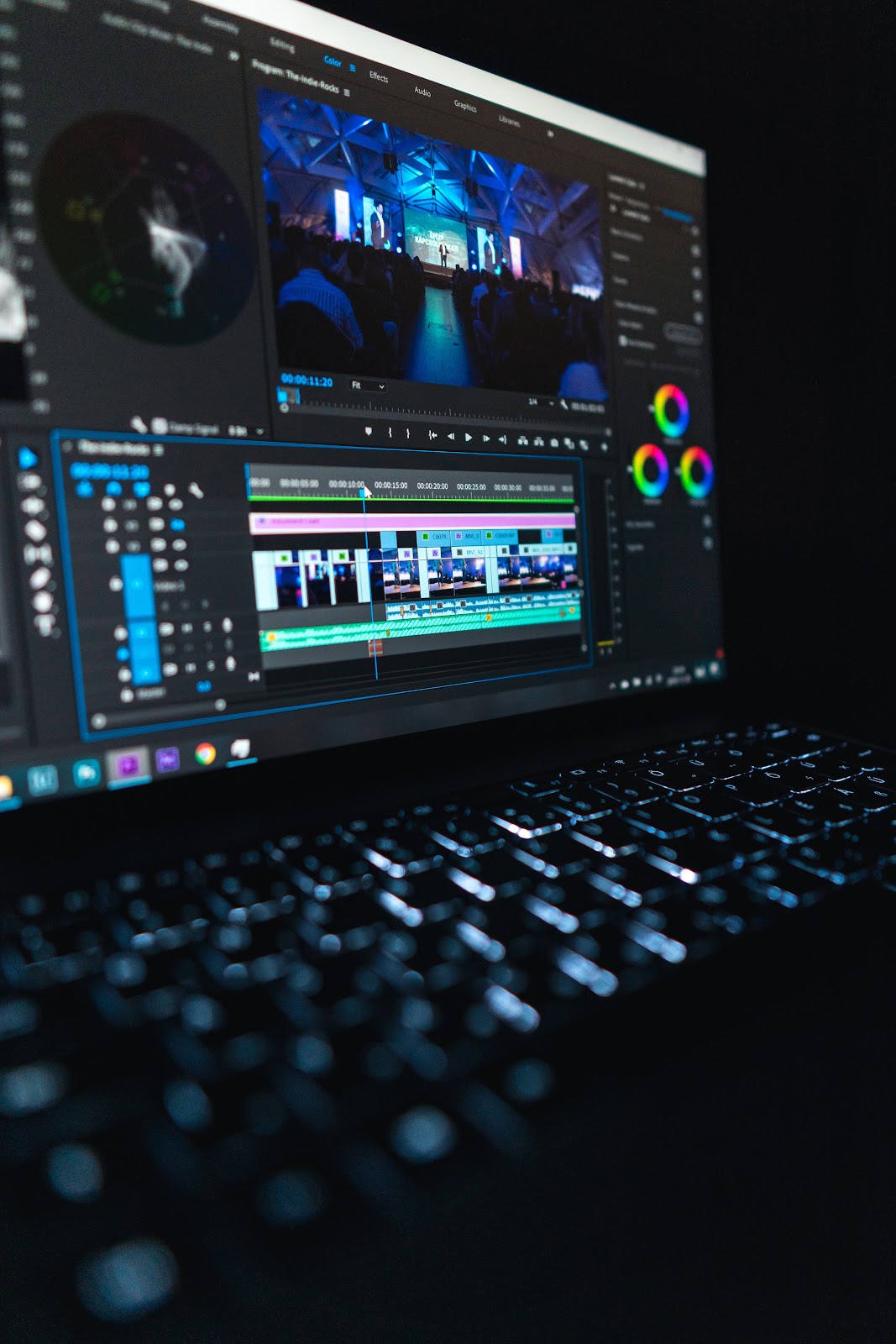
In video production, export is one of the most important steps to make the finished material available in various formats and resolutions. But which file format is best for which purpose? There are some important factors to consider here. For example, if the video is intended for the web or social media (e.g. Youtube, Instagram, TikTok or similar), a compressed format such as MP4 should be chosen to optimize loading times.
For post-production and further processing, on the other hand, a lossless format such as ProRes or DNxHD is recommended. In addition, aspects such as image quality, compatibility with different devices and storage space requirements should also be taken into account. So it's a matter of choosing the right file format depending on the objective and purpose to achieve the best possible result.
Once the video is completed, it's a matter of getting it out there and getting the word out. There are many platforms where you can share videos, for example YouTube, Vimeo, Facebook and Instagram or even TikTok. It's important to keep your target audience in mind and choose the platforms where you can best reach them.
Targeted promotion of the video can also help increase its reach. Social media ads or influencer marketing can be used for this purpose. Another option is to embed the video into your own website or blog.
Ultimately, however, the most important thing is that the video is of high quality and appealing - because only then will it be shared and recommended.
A successful video is the goal of every video producer. But how do you measure the success of a video? First, you should set clear goals that you want to achieve with the video: Do you want to achieve more reach or increase viewer engagement? Based on this, you can define suitable KPIs (Key Performance Indicators) and monitor them regularly.
Here, tools such as "Youtube Analytics" offer useful clues to the performance of the video. Feedback from the target audience is also important to identify weaknesses and adjust the video if necessary. Comprehensive performance measurement makes it possible to identify strengths and weaknesses of the video and to optimize future productions accordingly.

Creating films and videos is a complex process that requires thorough planning, appropriate equipment, and knowledge of settings and techniques. Post-processing of the material is as important as sorting, cutting and processing of the raw material to achieve a high quality result. It is also important to observe copyright and data protection regulations, as well as to ensure smooth cooperation with all stakeholders. Video tutorials can help learn the necessary skills.
If you take these tips into account, have some patience and are willing to learn from mistakes, you will soon be able to noticeably increase the quality of your videos.



